Volume 1: Fundamentals and Production Technologies
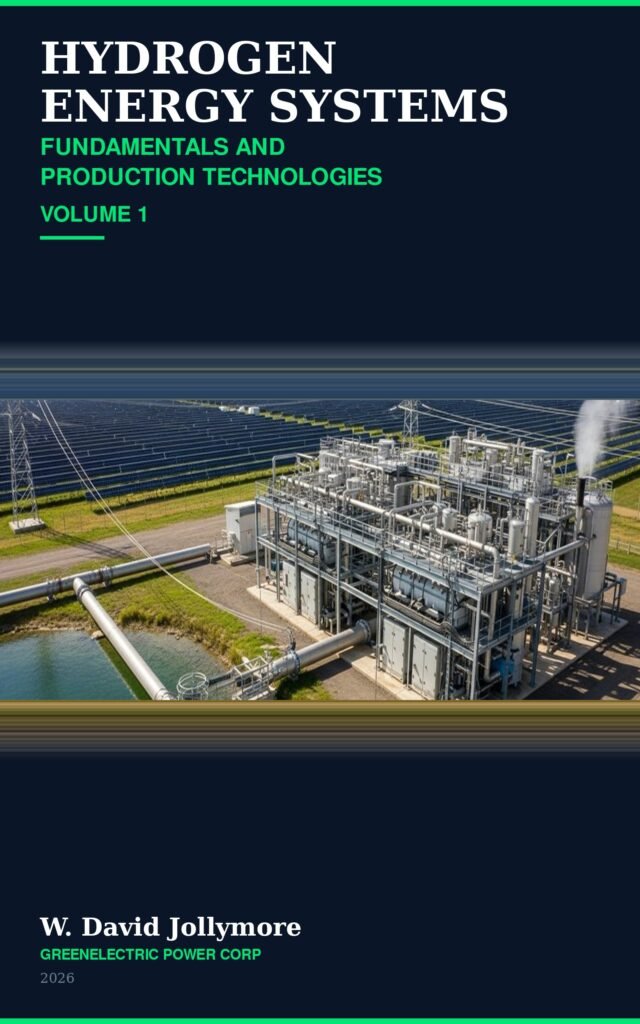
The opening volume in the series establishes the scientific and engineering bedrock that every subsequent volume builds upon — from the fundamental chemistry and physics of hydrogen as an energy carrier, to production pathways, storage considerations, and safety principles. It gives readers the grounding needed to engage seriously with hydrogen energy systems at a professional and academic level.
Volume 1 is written for energy professionals, engineers, students, and policy makers navigating the hydrogen economy — whether you’re an engineer entering the sector, a student in energy systems or chemical engineering, or a policy maker seeking technical literacy in a field reshaping global energy infrastructure.
Volume 2: Storage, Distribution and Fuel Cells
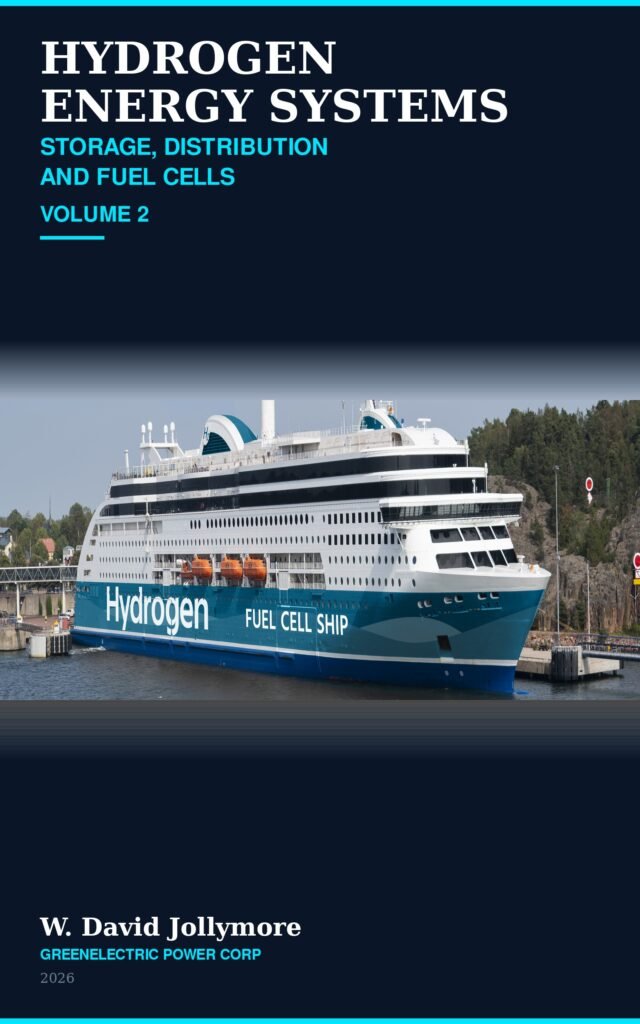
The second volume in the series bridges production fundamentals and real-world deployment, covering three core domains of a working hydrogen system: storage, distribution and infrastructure, and fuel cell technologies.
Storage spans compressed gas storage from Type I through Type V pressure vessels, liquid hydrogen cryogenic storage and boil-off management, and material-based storage including metal hydrides, ammonia, liquid organic hydrogen carriers, and metal-organic frameworks.
Distribution and Infrastructure covers pipeline transport design, hydrogen blending in natural gas networks, tube trailer and tanker logistics, maritime shipping, refueling station design, and the economics of capital and operating costs.
Fuel Cell Technologies treats all major fuel cell types in depth — PEM fuel cells (including the Toyota Mirai and Hyundai Nexo systems), solid oxide and reversible SOFC, alkaline, phosphoric acid, molten carbonate, and direct methanol fuel cells — with worked examples, polarization curve analysis, and comparative technology assessment.
Each chapter includes learning objectives, worked examples, graduated end-of-chapter problems, discussion questions, and field observations drawn from commercial hydrogen system operations. Prerequisite: Volume 1, or equivalent knowledge of hydrogen chemistry, thermodynamics, and electrochemistry.
Volume 3: Applications, Combustion, Economics and Policy
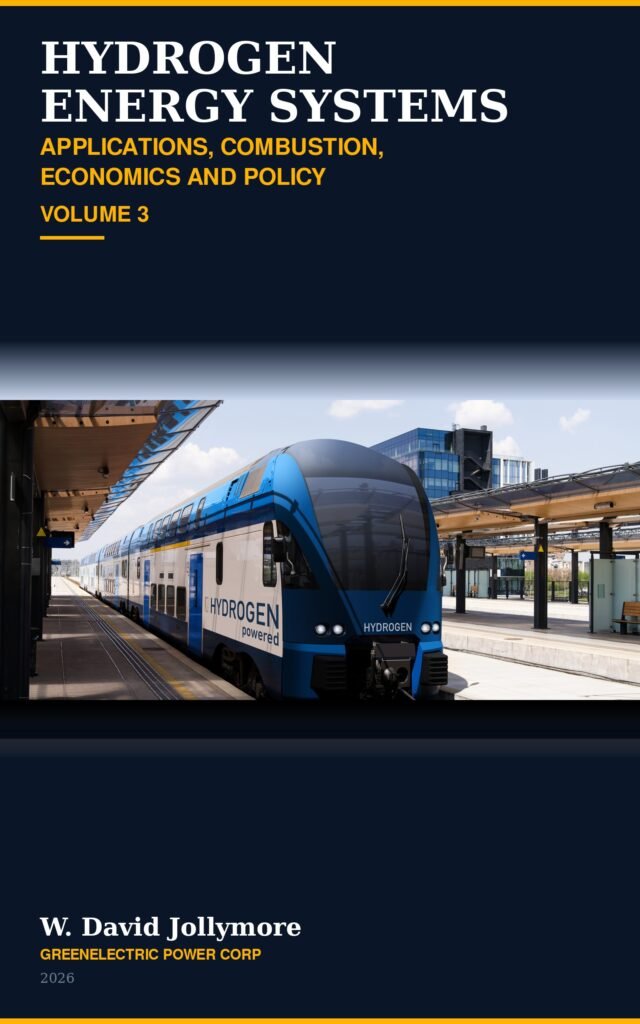
The third volume covers the real-world application of hydrogen across industry, transportation, and power generation, along with the economic and policy frameworks that govern its deployment.
Hydrogen Combustion and Engine Systems covers hydrogen internal combustion engines — design, injection strategies, NOx emissions, and abnormal combustion — along with HHO combustion enhancement drawn from the author’s own 50+ million mile field program with the Canadian Hydrogen Energy Company, and a rigorous comparative analysis separating documented science from industry marketing claims.
Industrial and Power Applications spans ammonia synthesis, oil refining, steel production via direct reduced iron, methanol synthesis, electronics manufacturing, and food processing, along with grid-scale power-to-gas and gas-to-power systems, seasonal energy storage, hydrogen gas turbines, and hybrid architectures combining hydrogen with batteries, diesel, and renewables.
Economic Analysis includes life cycle assessment methodology, well-to-wheel and cradle-to-grave analysis, greenhouse gas accounting, water consumption, critical minerals assessment, and comparative LCA of grey, blue, and green hydrogen, plus techno-economic analysis — LCOH calculation, discounted cash flow, sensitivity analysis, and real project case studies.
Policy and Regulatory Frameworks covers global hydrogen strategies, carbon pricing and emissions trading, subsidy programs, safety regulations (OSHA, NFPA, DOT), technical standards (ISO, SAE, ASME, CSA), permitting requirements, and policy recommendations for accelerated hydrogen adoption.
Each chapter includes learning objectives, worked examples, graduated end-of-chapter problems, discussion questions, and field observations drawn from commercial hydrogen system operations. Prerequisite: Volumes 1 and 2, or equivalent knowledge of hydrogen fundamentals, storage, and fuel cell systems.
Volume 4: Safety, Materials, Water, Emerging Technologies and Society
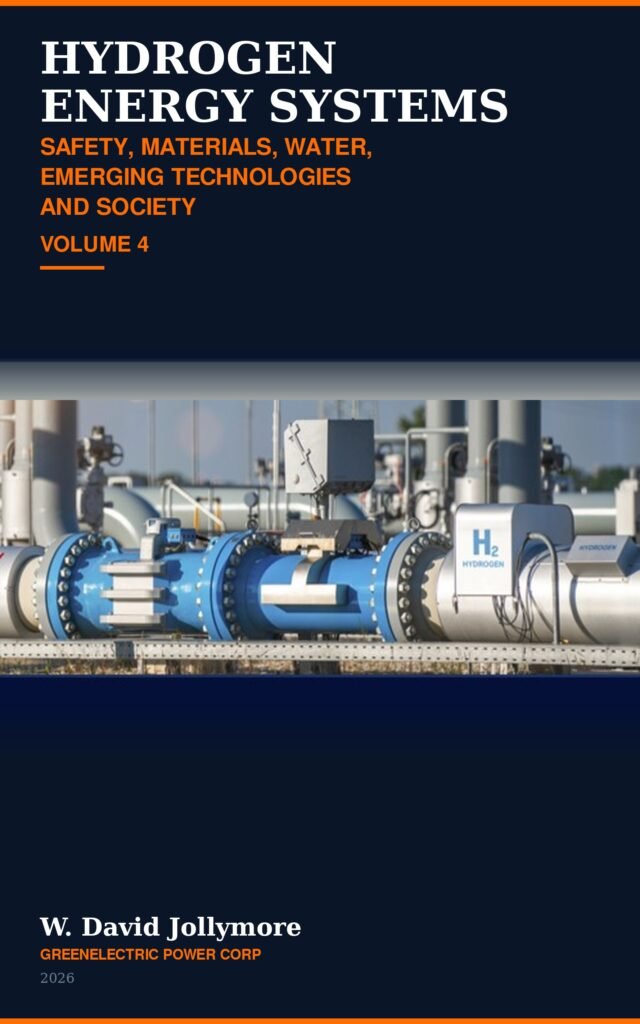
The fourth and final volume addresses the advanced engineering disciplines, emerging technologies, and societal dimensions that complete a rigorous treatment of hydrogen as an energy system.
Safety Engineering and Materials Science offers comprehensive quantitative risk assessment, consequence modeling, layer of protection analysis, and inherently safer design, alongside hydrogen embrittlement mechanisms, metal and elastomer selection for hydrogen service, composite pressure vessel materials, coatings, catalysts, membranes, and non-destructive testing methods — the most comprehensive treatment of hydrogen safety engineering available in a single textbook volume.
Water Resource Management covers water consumption and quality requirements for electrolysis, water treatment technologies, impurity effects on electrolyzer performance, closed-loop water recycling, and water chemistry control drawn directly from the author’s decades of field experience, along with regional water stress analysis and the water-energy nexus. This chapter draws on the author’s background in microbiology and water chemistry applied directly to hydrogen production systems.
Emerging Technologies and the Global Hydrogen Economy spans next-generation electrolyzer concepts, advanced storage, direct solar water splitting, artificial photosynthesis, plasma-assisted production, nuclear-hydrogen integration, AI and machine learning applications, carbon capture utilization, and nanotechnology, alongside the global hydrogen trade, national production advantages, regional hubs, geopolitical dimensions, investment trends, and scenarios to 2050.
Transportation and Society covers all transportation segments — light-duty FCEVs, heavy-duty trucks, buses, rail, maritime, and aviation — along with total cost of ownership analysis, refueling infrastructure networks, and the social acceptance dimensions of hydrogen deployment, including risk perception, public communication, community engagement, myth-busting, and building social license to operate.
Each chapter includes learning objectives, worked examples, graduated end-of-chapter problems, discussion questions, and field observations drawn from commercial hydrogen system operations. Prerequisite: Volumes 1, 2, and 3, or equivalent knowledge of hydrogen fundamentals, storage, fuel cells, and applications.